

- Dates: June 14-17; July 14-16 & CUSTOM-Min 2 People
- Duration: 4 Days**
- Level: Beginner
- Client Ratio: 4:1
- Cost 4 Day: – 4:1 $1200 3:1 $1320 2:1 $1600 1:1 $2400
- Included:Park fees, group climbing equipment, and guide services. *(meals while on the mountain, tents, stoves, cook kits and personal climbing equipment rentals available)
- Not Included:Ground transportation airfare, transportation within Seattle, hotel accommodations, restaurant meals, gratuities for guides, all meals while on the mountain, tents, stoves, cook kits, and all personal items.
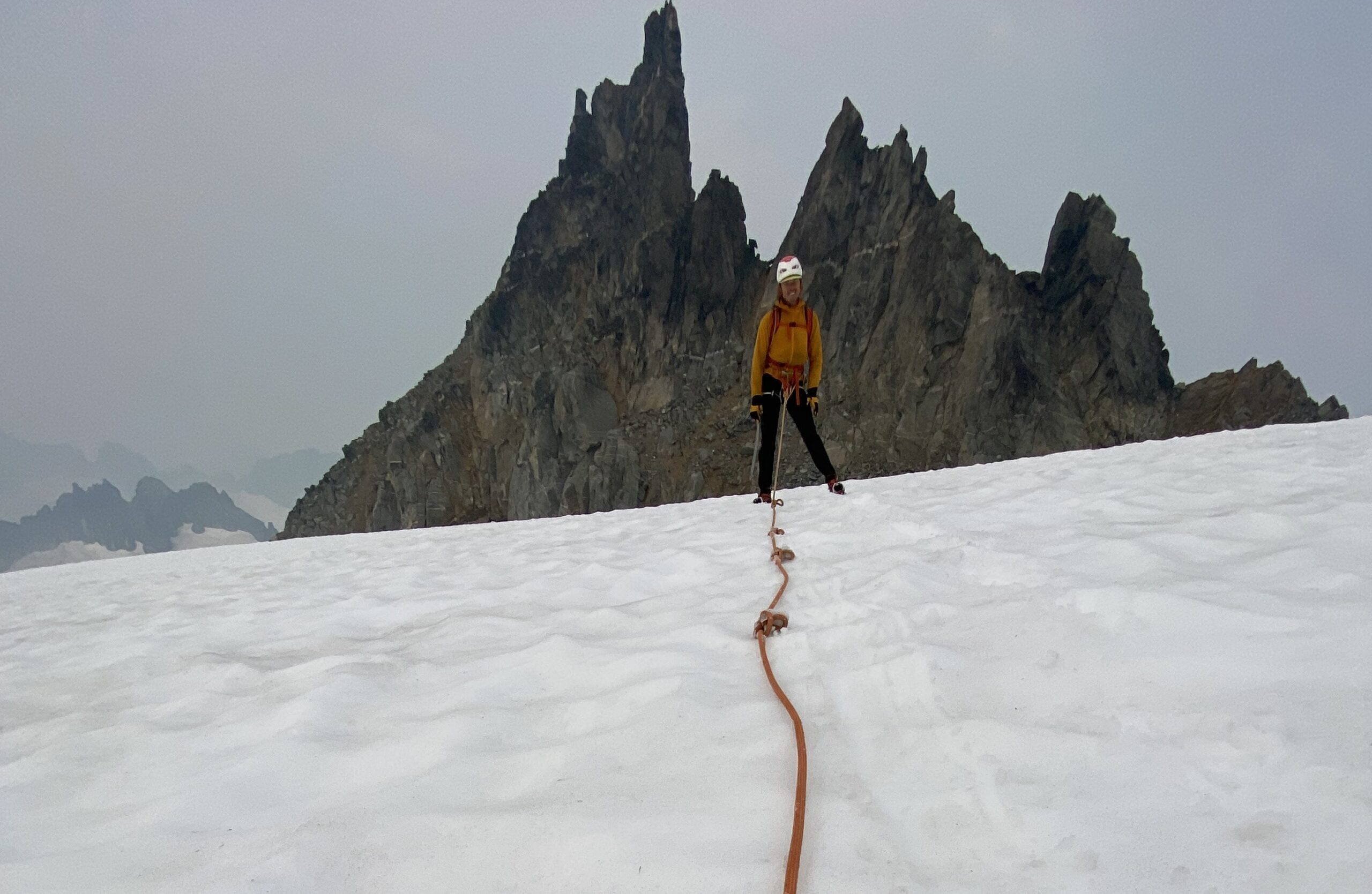
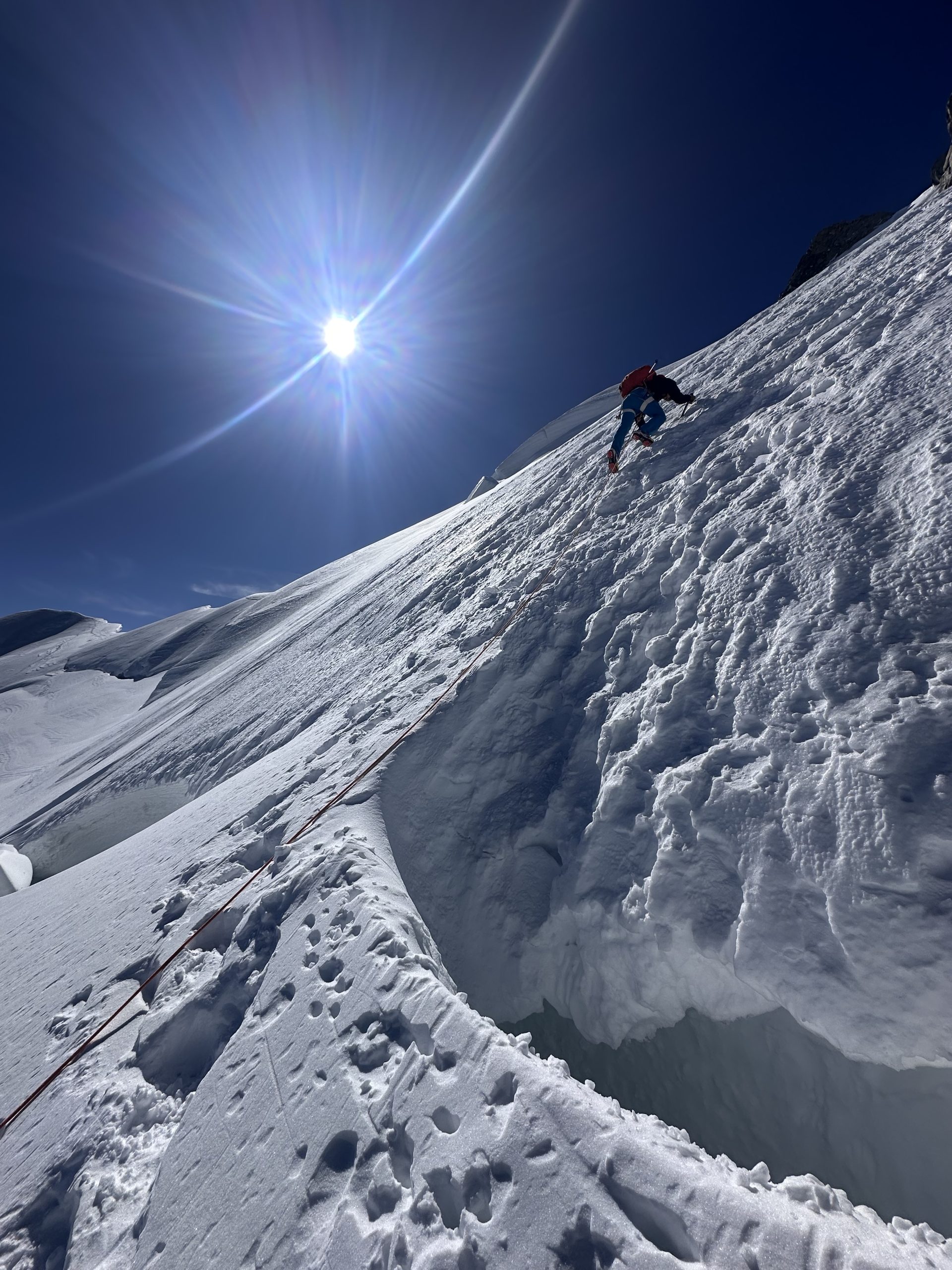
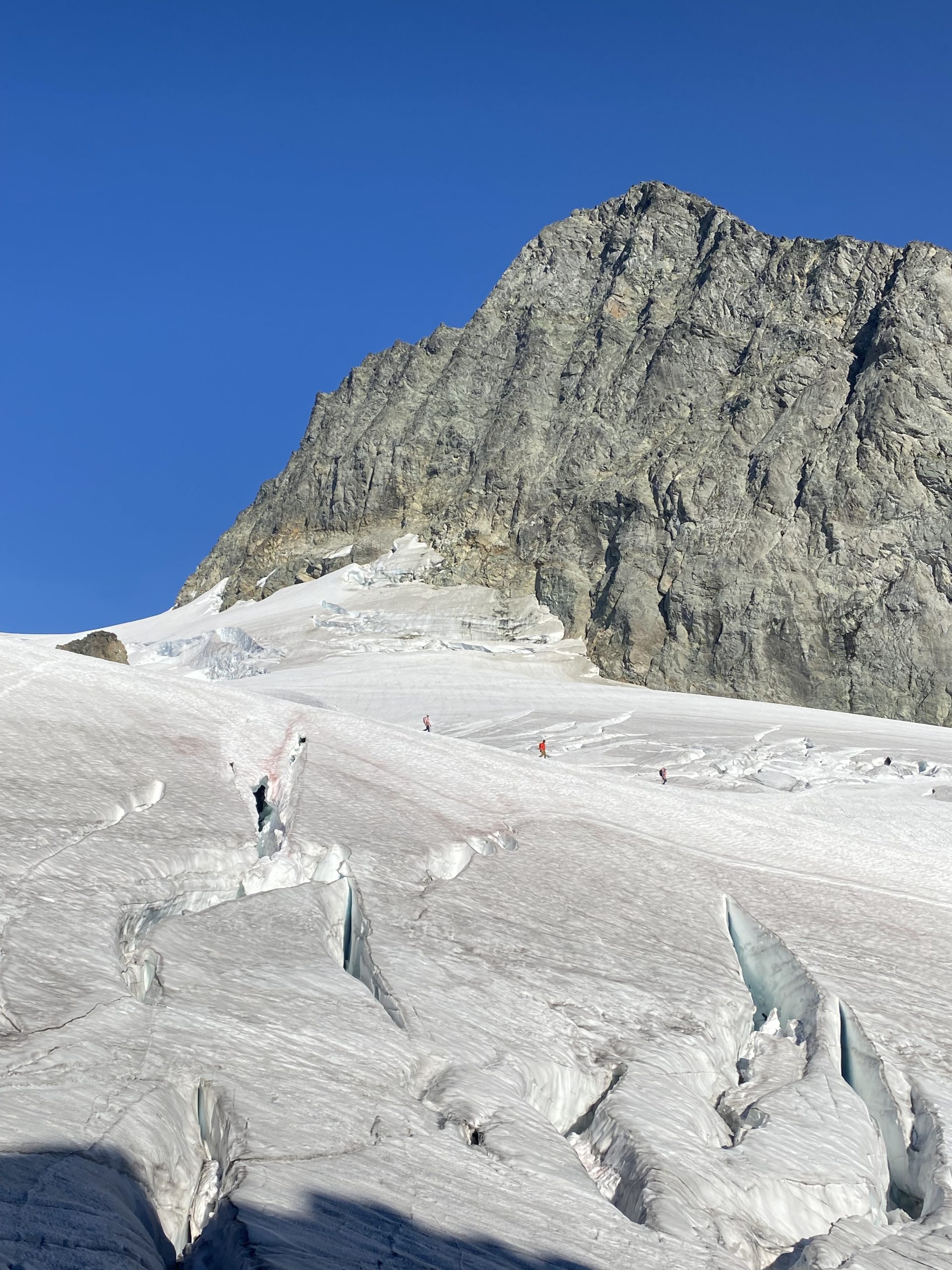
Our Alpinism 101 – Intro to Mountaineering course is designed for climbers ready to take their first steps into the world of alpine climbing. We begin with a one-day Crevasse Rescue and Glacier Travel Seminar at Snoqualmie Pass, where you’ll gain the essential tools to travel safely on snow and ice, practice crevasse rescue systems, and build a solid foundation in glacier travel. From there, the program continues into the rugged North Cascades for a weekend of alpine instruction, blending technical skills with hands-on experience in one of the most inspiring mountain ranges in the lower 48.
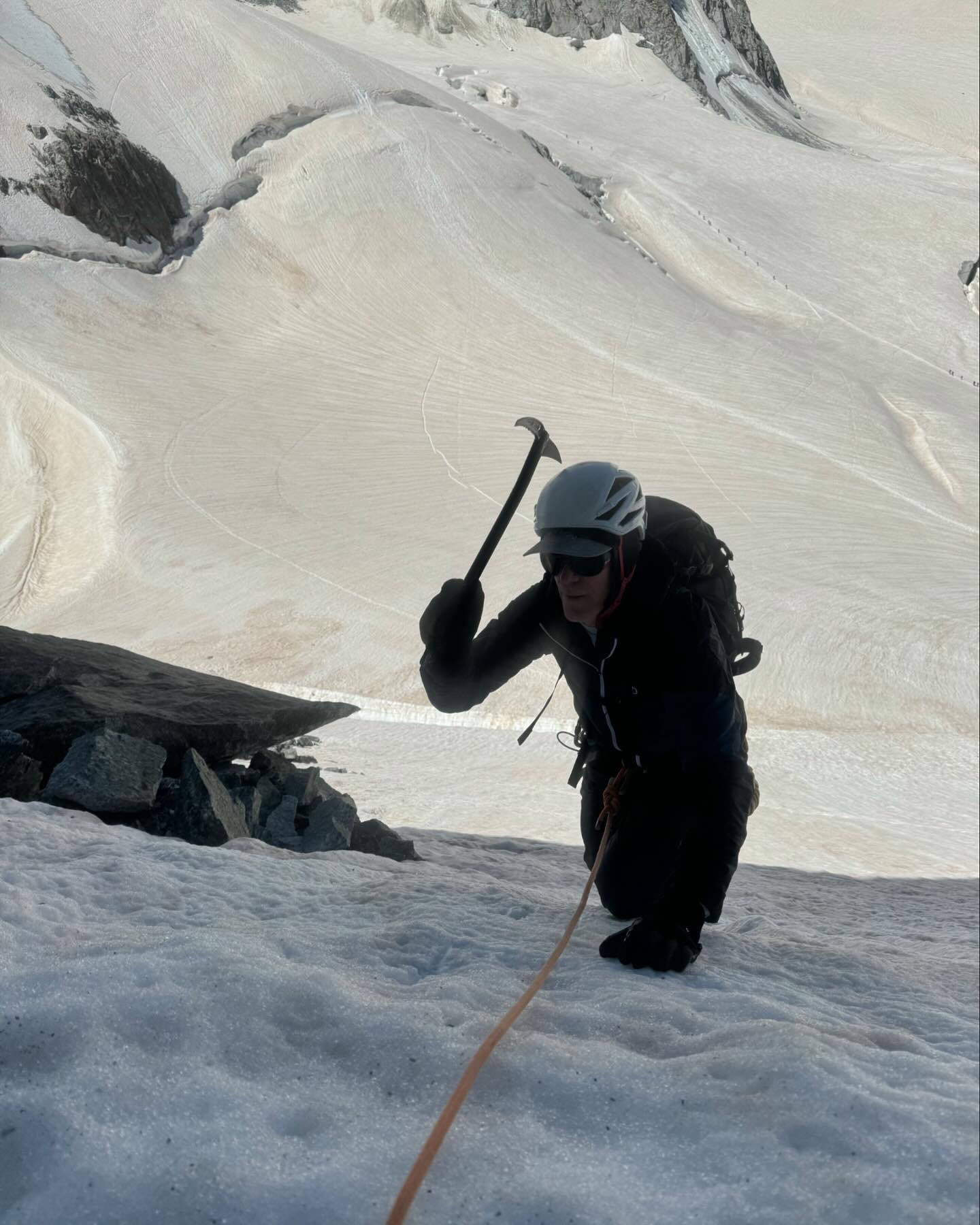
Over the course of the program, you’ll learn the fundamentals of alpine movement on rock, snow, and ice, how to choose and use gear effectively, construct anchor systems, and develop self-rescue techniques. The course also emphasizes the philosophy of traveling fast and light in complex terrain, preparing you for summit climbs and bigger objectives ahead. With small group sizes and personalized instruction, this program serves as the baseline for more advanced courses and bigger peaks—perfect training for climbs like Mount Baker, Shuksan, Sahale, or even Mount Rainier and future high-altitude goals.
What you will learn
- Knots and anchors
- Snow and ice anchor placement, construction, and equalization
- Ice axe application for climbing moderate snow and ice
- Ropes usage in glacier travel team management,
- Crampon usage and techniques: French and American techniques
- Crevasse rescue
- Route finding, and crevasse navigation and trip planning techniques
- Hazard assessment of: objective vs. subjective hazards
- Discussions on mountain weather, alpine ecology, Leave No Trace ethics, and moving fast and light – balancing speed with safety.
Climbing Gear
- Climbing Helmet: Lightweight
- Rock Climbing Harness: Padded and adjustable
- Approach Shoes(After July 4th or when the now is gone)
- Rock Climbing Shoes – Snug and comfortable
- Belay Device: Autoblocking style belay device (example Petzl Reverso)
- Nylon Slings: (1) 60 cm nylon sling, (1) 120 cm nylon sling
- 2 Locking carabiners 2-Large, pear-shaped carabiners;
- 2 Regular carabiners (e.g. Wire-gate are recommended)
Early Season
- Ice Axe Lightweight Under 5’7” use 60cm, 5’7”- 6’2” use 65cm,
- 3 Season mountaineering boots (Must be crampon compatible)
- Crampons with anti-ball plate,
- Adjustable trekking poles- optional
Upper Body
- Synthetic T-shirt
- Sun Hoodie Lightweight, light colored for sunny days
- Sports bra Two, synthetic,
- Soft Shell with hood
- Mid-Weight Down/Synthetic Jacket (with hood)
- Hard shell jacket with hood Waterproof and breathable. Gore-Tex or equivalent is best
- 1 Pair light leather palmed gloves for warmth and rappelling
- Warm hat Wool or synthetic
- Buff or Balaclava
- Shade hat or baseball cap
Lower Body
- 1 Pair soft shell pants lightweight
- Synthetic hiking socks
Backpack
- 50-60 litter pack. Optional 20-30 “on route” pack.
Miscellaneous Equipment
- Sunglasses 100% UV protection with side shields or wrap around.
- Personal first aid repair kit Basics: moleskin/blister kit, Band-Aids, first-aid tape, ibuprofen, personal medications, and batteries etc.
- Lip balm At least SPF 20
- Sunscreen At least SPF 40
- Headlamp lightweight LED
- 2 water bottles 1 liter wide-mouth Nalgene and 1 bottle holster, or
- Hydration bladder With drinking tube and 1 Nalgene bottle
- WAG Bag or toilet paper stored in a plastic bag.
- Bandana
- Hand wipes
- Favorite snack food
Day 1 – Hike In and Foundations of Mountaineering
Meet your guides and teammates, review course objectives, and complete a gear check before hiking to our alpine basecamp. Along the way, learn efficient pacing, rest-step technique, and travel strategies on uneven terrain. Once at camp, review essential knots, belay transitions, and rope management. The day concludes with an introduction to snow travel and self-belay with an ice axe.
Day 2 – Snow Travel and Self-Arrest
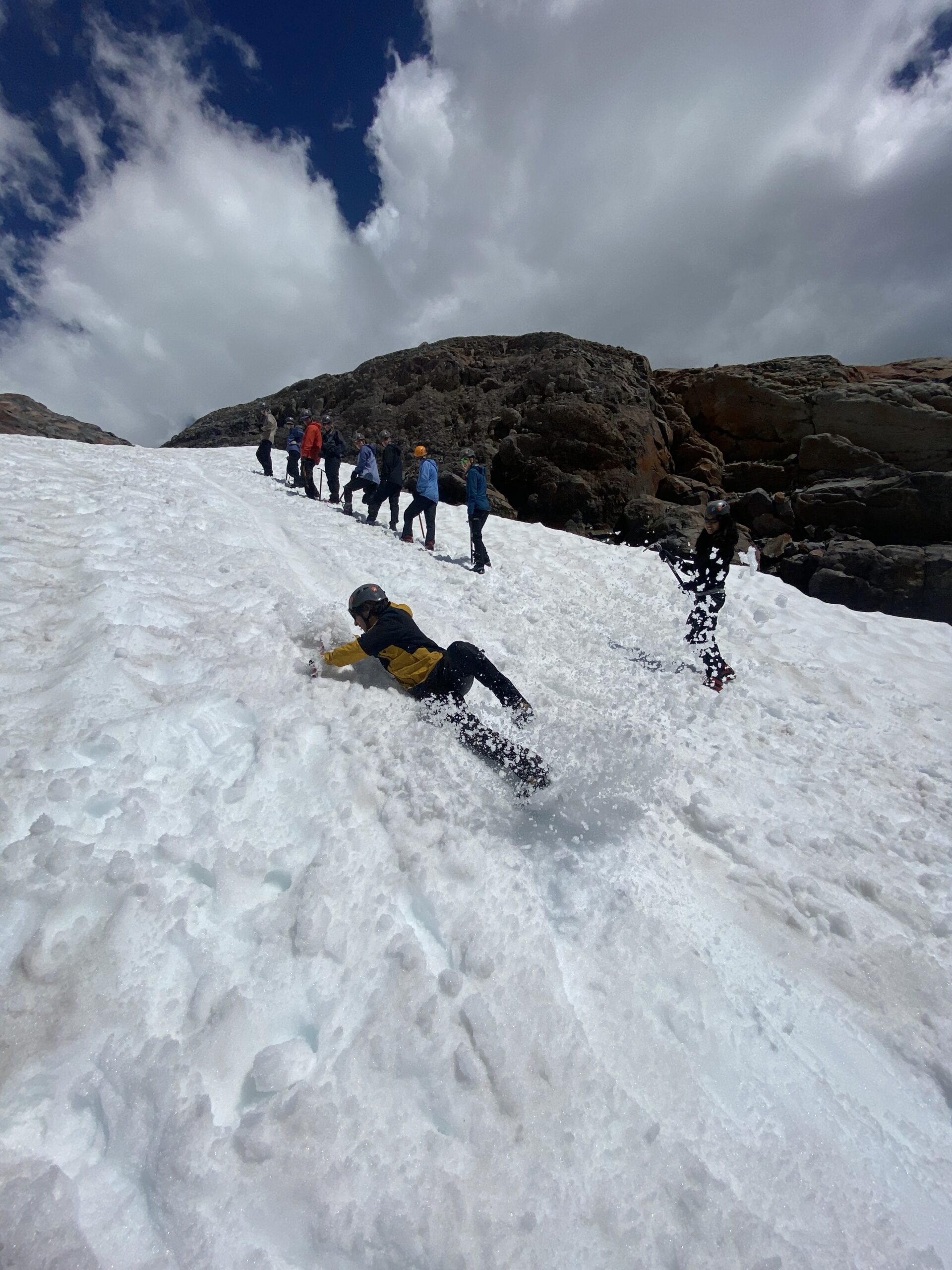
Begin the day refining movement skills on snow—ascending, descending, and traversing safely in varying conditions. Practice step-kicking, plunge-stepping, and using the ice axe for balance and security. Progress into self-arrest training, learning how to stop a fall in multiple positions. Finish the day with an overview of snow anchors and basic belay systems in steep snow.
Day 3 – Glacier Travel and Crevasse Rescue
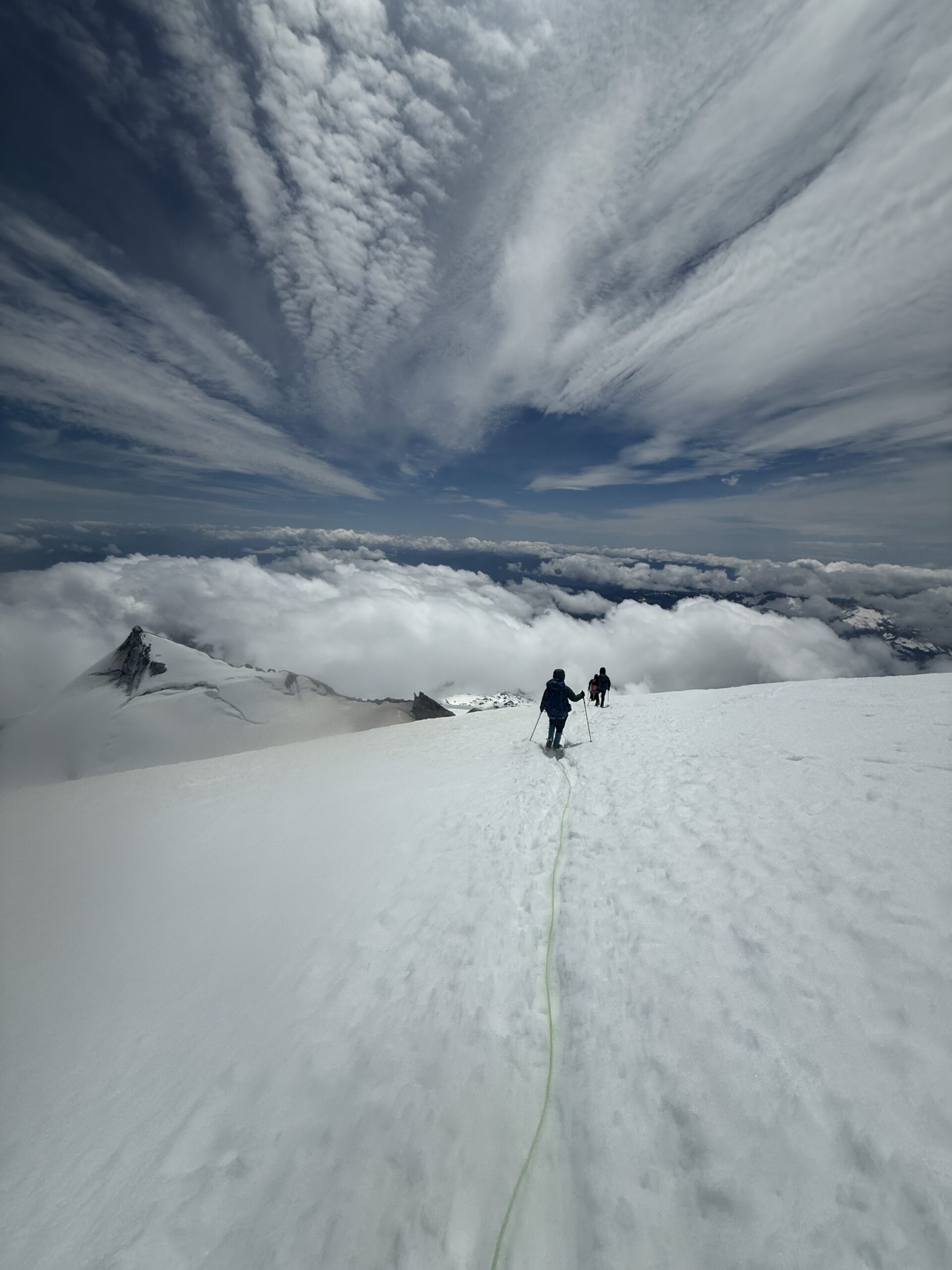
Learn glacier travel fundamentals, including rope team spacing, hazard recognition, and route finding across glaciated terrain. Spend the afternoon practicing crevasse rescue systems, both as a rescuer and as a fallen climber. Emphasis is placed on teamwork, rope handling, and efficient problem-solving in realistic rescue scenarios.
Day 4 – Alpine Ascent and Course Wrap-Up
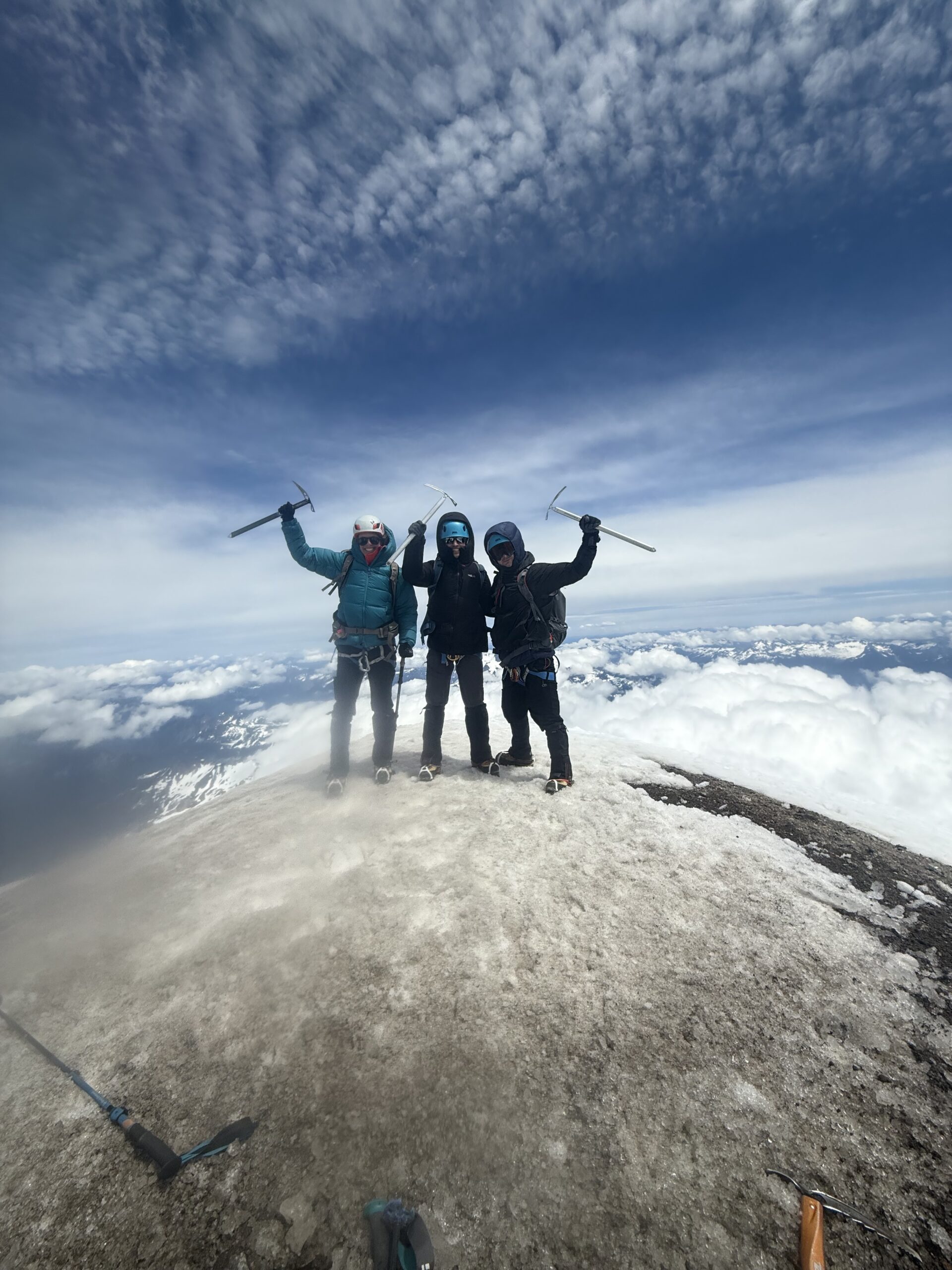
Put your new skills into practice on a moderate alpine objective. Students will take an active role in navigation, pacing, transitions, and team management under guide supervision. The climb offers opportunities to apply snow travel, rope systems, and decision-making in a real-world setting. Conclude the course with a group debrief, individualized feedback, and discussion of next steps for your mountaineering journey.
Tipping is considered standard practice in the guiding industry. Tipping amounts vary – so $20-30 per day per person/per guide is average that works well for the guides without a serious blow to your wallet. Often 10% of the course cost is a good rule-of-thumb. If you feel that the program was exceptional or substandard the tip can reflect that.
CAN I RENT EQUIPMENT FROM BCAG?
No, for these trips we strongly suggest to buy your equipment due to obscenely large rental costs for trip of this length.
HOW HEAVY WILL MY PACK BE?
Day trips will keep your pack between 10-15 pounds max.
WHEN DO I NEED TO PAY THE BALANCE OF MY TRIP?
For Scheduled Domestic Courses and Climbs: Your balance is due 60 days from trip departure. Payable by check, Credit Card with service charge or Venmo.
WHAT HAPPENS IF I NEED TO CANCEL MY TRIP?
If you should decide to cancel your trip, BCAG must be notified in writing. Your trip will be cancelled from the date we receive written notice. You will be assessed a cancellation fee according to the following schedule:
90 to 31 days from trip departure – 50% of trip cost
30 days or less – 100% of trip cost
WHAT HAPPENS IF BC ADVENTURE GUIDES HAS TO CANCEL MY TRIP?
In the rare circumstance where we need to cancel a program you can reschedule without a fee or receive a refund on your deposit. If circumstances arise that force us to cancel a program that is already in progress, we reserve the right to decide whether a refund or credit, at a prorated rate, will be issued. We are not responsible for cancellation fees or costs arising from your changed or cancelled flights, lodging, or other arrangements. We strongly recommend obtaining trip cancellation insurance from your travel agent.